Introduction
We as humans find entertainment in the strangest places. In his Why are we Morbidly Curious? video, Vsauce says, “We are paradoxically drawn towards some pretty repulsive things: car accidents… gore, the macabre… we often feel guilty for being interested in these types of things; after all, they are unpleasant, but yet we can’t look away.” (1:20) This inherent inquisitiveness we have may provide an explanation as to why people are so drawn to horror media.
For example, some of the films from the Saw and Final Destination series—my two favourite horror series—are in my top 10 movies of all time. My childhood best friend and I ruthlessly, and with barely contained glee, sought out horror films during sleepovers to the point where seeing Final Destination: Bloodlines in the cinema felt weird considering all the piracy sites I watched the first five films on.
Matthew Strohl also offers an explanation for why we love horror so much in his essay, Horror and Hedonic Ambivalence. Strohl explains, “People normally hate it when someone pulls their hair. Being in the middle of sex does not change the way it feels to have one’s hair pulled. It puts this feeling in a special type of context where it is welcomed.” Strohl is positing here that in certain situations—with certain caveats—sensations such as hair pulling and falling, sensations that we are normally averse to, can be made enjoyable. And from his article we can begin to understand why horror is a popular genre. Normally, a prolonged car pileup on the motorway caused by logs falling from a truck in the world outside the cinema is a very distressing thing to witness, but when we watch it happen in Final Destination 2 (10:14-12:13), we as the audience know that it isn’t real, and we can speculate on how it was done. This speculation, and the brief thrill of terror, is what reframes the distressing content and makes horror books and films enjoyable.
Horror and Anxiety
Horror and anxiety have a long and deep relationship. Without one, the other would not exist in its current form. The best example of this comes from the fifteen categories of fear showcased in The Magnus Archives. If you’ve ever felt uneasy on the tube, grown flighty and restless in a crowd, or looked at the Byford Dolphin incident and felt the visceral sensation of your stomach turning, then you will be very familiar with The Buried. If you’re easily fooled with sarcasm, and often worry that the people in your life are hiding something from you, then you may be a favourite of The Spiral. And on the list goes with all kinds of different human fears. Horror helps us process and understand our anxieties and fears.
Right now I’m finding a lot of resonance in stories like I Have No Mouth and I Must Scream and Dune in the wake of one of the big AI programs breaking out of its code. And while not necessarily horror books, the Butlerian Jihad from the Dune series is also a horrifying thing involving thinking computers. I find comfort in their defeat during these technologically terrifying times.
When I was getting bullied in secondary school and I read about Carrie getting her well-deserved vengeance on her abusers, I found a sense of peace. Whether it comes from the main character’s survival, defeat of their enemies, or simply the fact that someone is having a worse day than you are, there is comfort and catharsis to be found in horror. This may explain why we yearn for distress and discomfort. After all, it was Aristotle who said that storytelling comes from hamartia, the feeling you get when problems unfold and resolve across the narrative. If the audience leaves feeling better than when they arrived, it’s a good measure of a story’s success. But there may be another reason why we find ourselves so attached to horror.
Hear Me Out
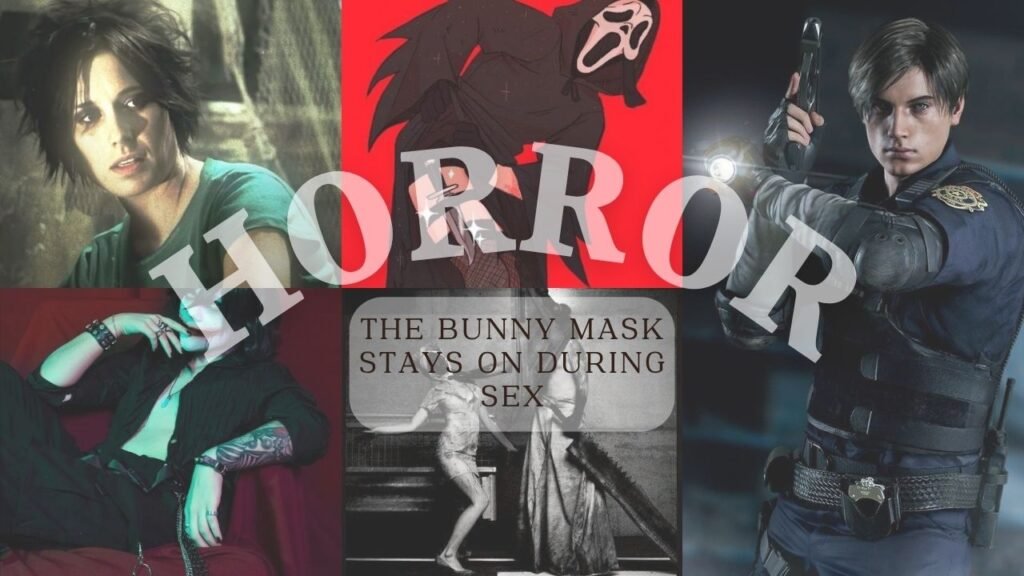
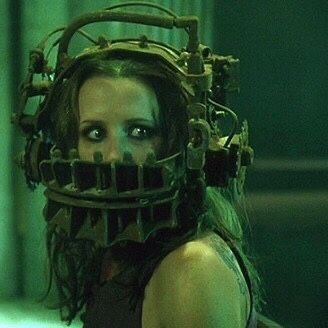
We’ve all had to defend an utterly horrendous ‘hear me out’ that we thought wasn’t really that bad. My worst one was when I thought I was among shared minds and I said ‘The reverse bear trap stays on during sex!’ while talking about Saw. I suspect this is because the reverse bear trap (FIG. 1) looks very similar to kink gear. While not exactly the same and sporting a more industrial look, the reverse bear trap hits all of the same beats as kink wear. It restrains Amanda’s head and muffles her cries by taking up the space between her teeth inside her mouth.
And this isn’t the only Saw trap that harkens back to kink and fetish wear. Most notably and most obvious are the shotgun collar from Saw III (FIG. 2), and the beginning of the trial of five in Saw V (FIG. 3) where five people are tethered by collars around their necks and have to struggle forward to the keys that will unlock the collars. Again, both collar-related traps that hit the classic beats of kink and fetish wear.
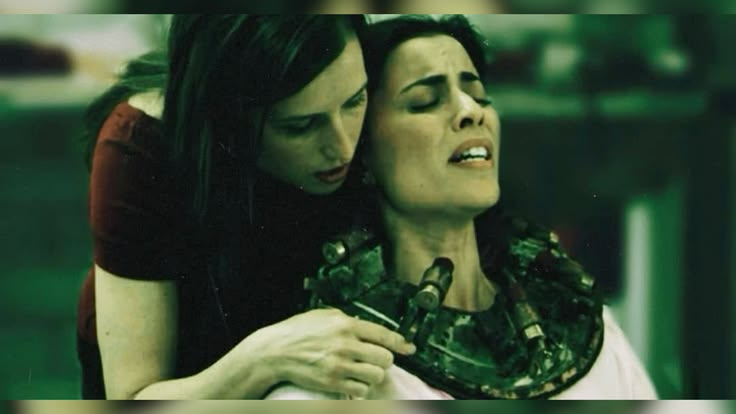
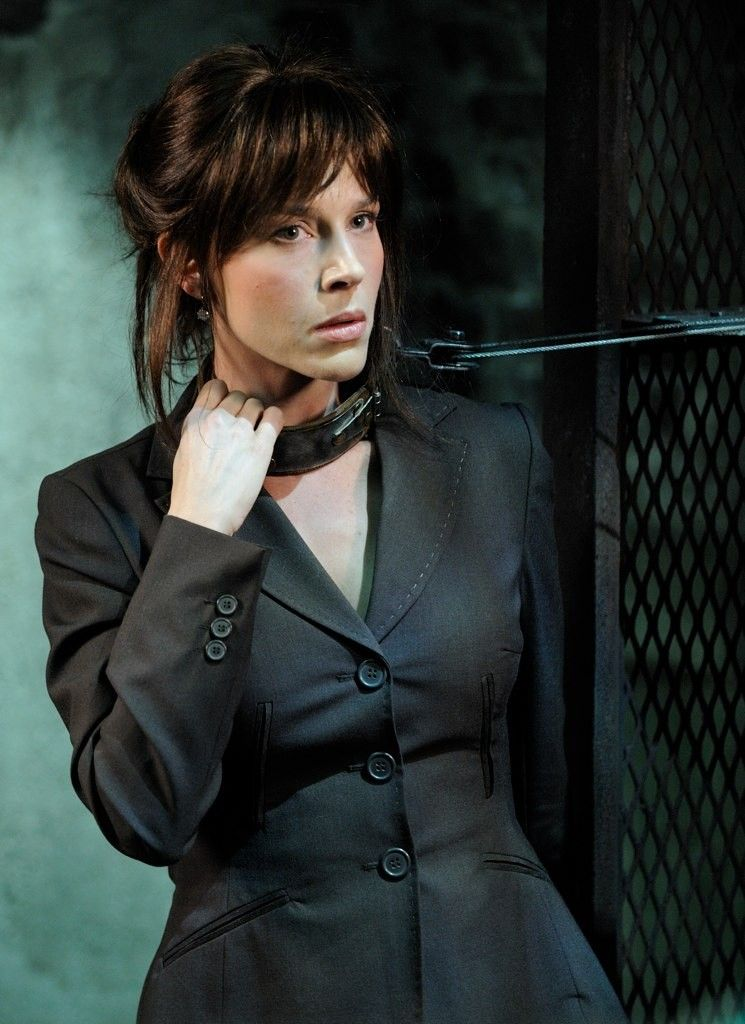
The shotgun trap is literally a collar, but the way Amanda administers it to Lynn and primes the explosives is overtly sexually charged and seems to be calling out to eroticism. Amanda is leaning over Lynn, and for the remainder of the film she circles her like a vulture, spinning a knife in her hands whilst Lynn administers complex brain surgery to John Kramer. It’s also worth mentioning that Amanda is a very classically pretty young woman, as is Lynn, adding to the erotically charged nature of their scenes.
I would also like to take a brief personal aside to applaud Saw III for having the only good self-harm representation in media as part of Amanda’s character. Representation that was important to me as someone who struggled with that insidious notion when I was a teenager and watching the Saw movies on a piracy site.
And it’s not just the Saw series where these classic attractions are reframed by the grotesque. This phenomenon can be observed in Donnie Darko, where the classic image of the Playboy bunny is remodelled by Frank in his bunny suit, who comes to Donnie to tell him that the world will end in 28 days, 6 hours, 42 minutes, and 12 seconds. While the relationship between Frank and Donnie is not explicitly sexual and doesn’t include any sexual undertones, that is not what we’re looking for this time. It’s the imagery of the bunny mask and partly what rabbits represent. Rabbits and the purity and innocence they represent have been twisted into something horrifying before, most notably in Watership Down (the film that traumatised children everywhere), but in Donnie Darko the shape of the rabbit mask makes a clear callback to the Playboy Bunny outfit. A very recognisable piece of iconography, especially if you grew up in the early 2000s.
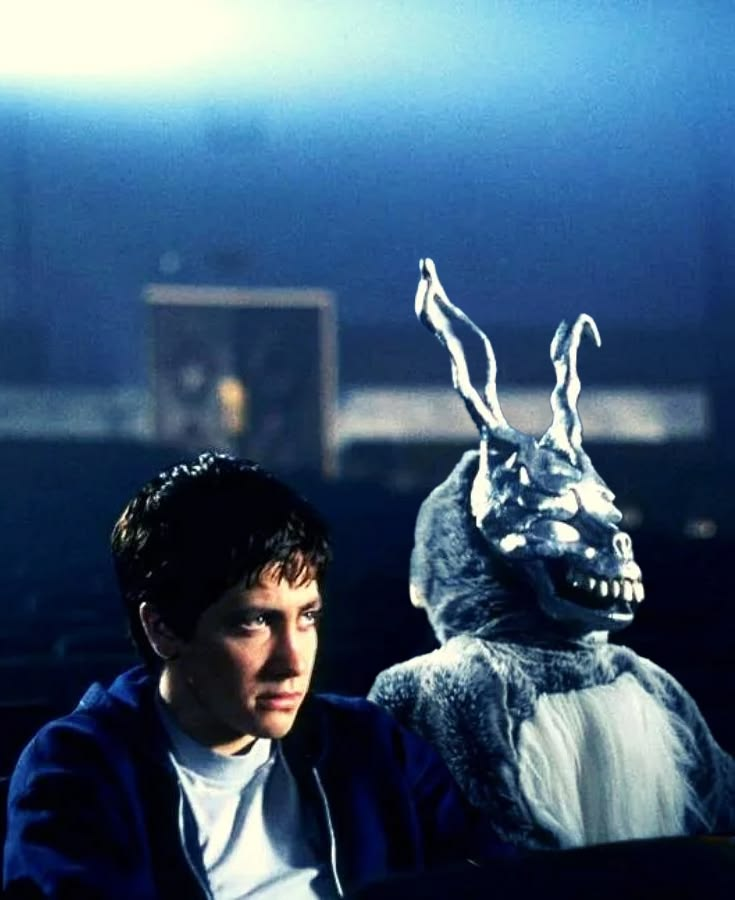
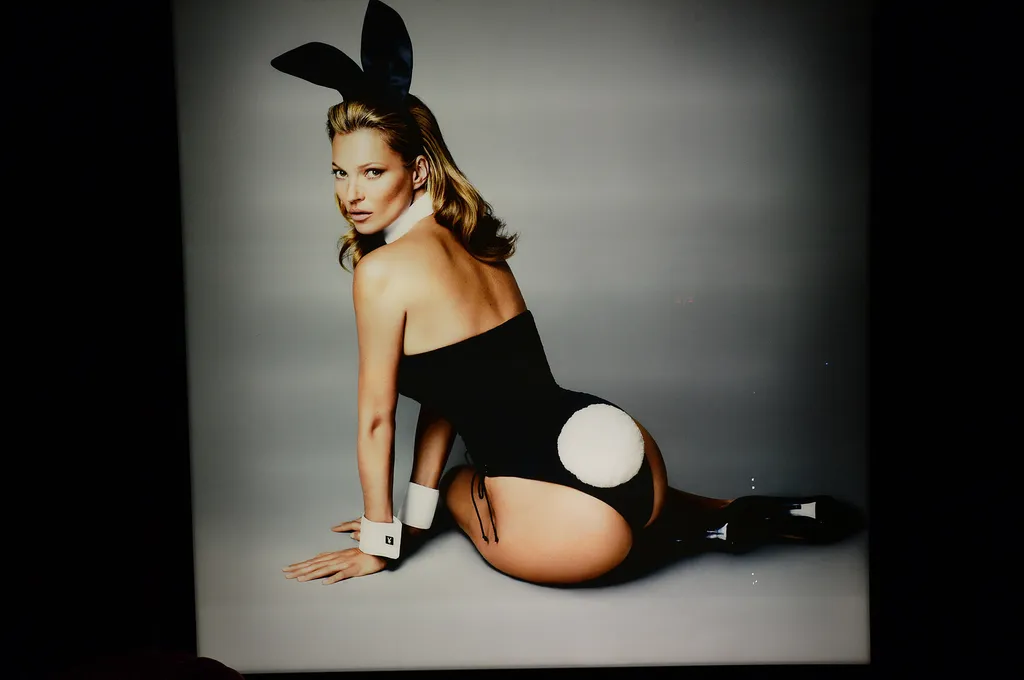
The rest of the bunny suit is neither here nor there, the mask is the focus here. In terms of kink, masks can often elevate a sexual experience and make it more exciting. In times where queerness is not as accepted, a mask can help a queer person engage in sexual acts without revealing themselves.
Which brings me to Ghostface, Billy Loomis, and Stu Macher from the 90s Scream.
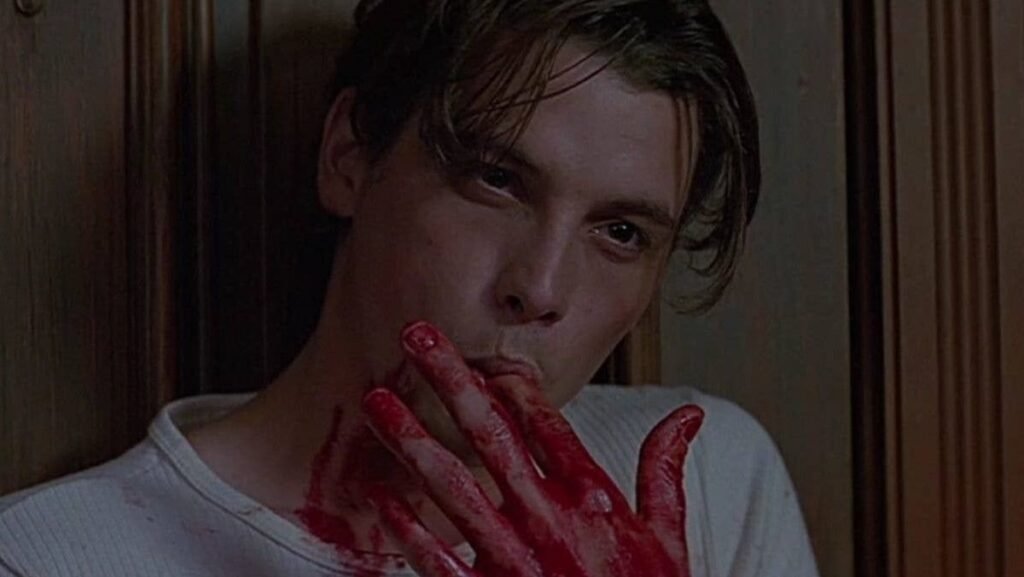
If we cast our minds back to 2020, there was a surge of people lusting after the Ghostface masks, particularly on TikTok, which was then sustained into 2022 when the Scream remake was released. But why was the Ghostface iconography specifically so popular among the queer and kink communities? Vide0 N4sty provides a little insight when she discusses Stu and Billy’s dynamic in her video essay Queering the Slasher. She says, “To many an academic or fanfic writer the homosocial dynamic displayed by Billy and Stu throughout the film can easily be read as that of secret gay lovers… only after their reveal as the killers are they able to come out and express their attraction for each other.” (2:31) Their dynamic really resonated with a lot of queer people who watched Scream, which is perhaps what led to the attraction to the Ghostface masks, upholding them as a symbol of sexuality within horror movies. Though I suspect that both Stu and Billy being two conventionally attractive men was a big catalyst to this response.
Horror is Hot People
Throughout this essay I’ve presented various characters’ popularity and sexual themes as being a result of their attractiveness by conventional societal standards. Both Amanda Young and Lynn Denlon are played by stereotypically attractive actresses. Put them in sexually charged positions with equipment that presents as very thinly veiled fetish wear, and you have the makings of the holy grail of yuri. The same goes for Billy Loomis and Stu Macher, drench Matthew Lillard and Skeet Ulrich in fake blood and you have the makings of two overly attractive queer characters contained within the horror sphere.
To go a little deeper into this concept, I believe that it’s demonstrated best in the Resident Evil video game series. And by me saying Resident Evil I think we all know who just sprang to mind but bear with me because I want to talk about why.
Let’s turn our attention to Racoon City, and discuss Claire Redfield and Leon Kennedy from the Resident Evil 2 Remake.
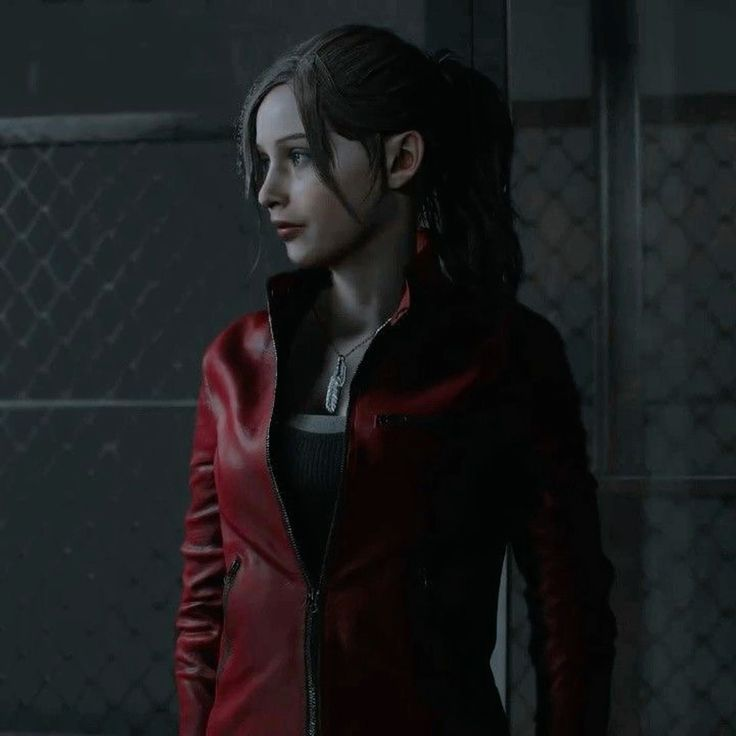
Starting with Claire (FIG. 7), she’s intensely driven, she can handle herself against zombie hordes, she walks with an air of confidence & surety, and she can competently handle a gun. All very stereotypically masculine traits that allow male players to relate to the character. And by angling the camera in such a way that this attractive woman remains consistently on the player’s level, you immediately have boys flocking to the game.
And then we have the man of the hour.
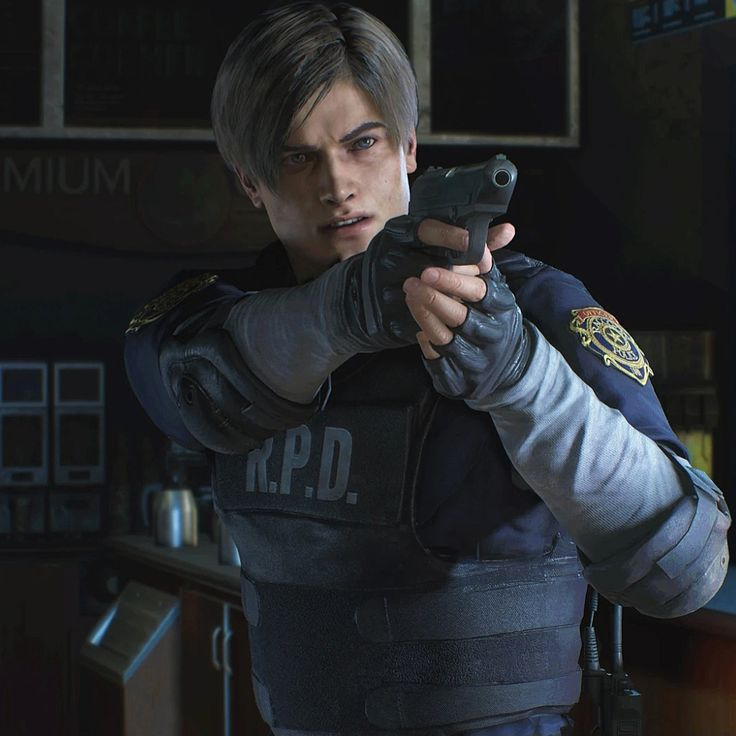
Leon Kennedy is a hero, he’s intensely motivated to do the right thing and uphold safety and justice. He’s muscular in his first appearance and only gets buffer as the games go on. He has a kind face and a calming voice, and he’s classically handsome. They do the same camera angle wizardry they do with Claire for Leon as well. He’s often shot at angles that highlight his best features, puts him on the player’s level or puts him in a heroic position (FIG. 8).
So now we also have our female audience for the game, and by having two stereotypically attractive leads of opposing gender in a horror survival video game the games garnered a massive following.
I started playing Resident Evil 2 after watching the new Resident Evil film, directed by Zach Cregger. In part because I was intrigued by the film and wanted to delve deeper into the RE-Verse but also because I’ve heard a lot of my friends swoon over Leon and I wanted to see what all the fuss was about. It’s not absurd to think that this same situation with Leon and Claire drew a lot of people to the games over the years.
So What Have We Learned Today?
So what exactly is it that draws us to horror so intensely? Is it morbid curiosity? Attractive characters played by or designed after conventionally attractive people? Or sexual undertones in costuming and positioning?
It’s here where I would like to propose a diagram. I’m sure we’re all familiar with the fire triangle, the three things you need to start, or if you take one of them away, extinguish a fire. I’ve taken the liberty of drawing up a helpful diagram of what I’m calling the horror triangle, presenting the three main reasons people find themselves attracted to horror.
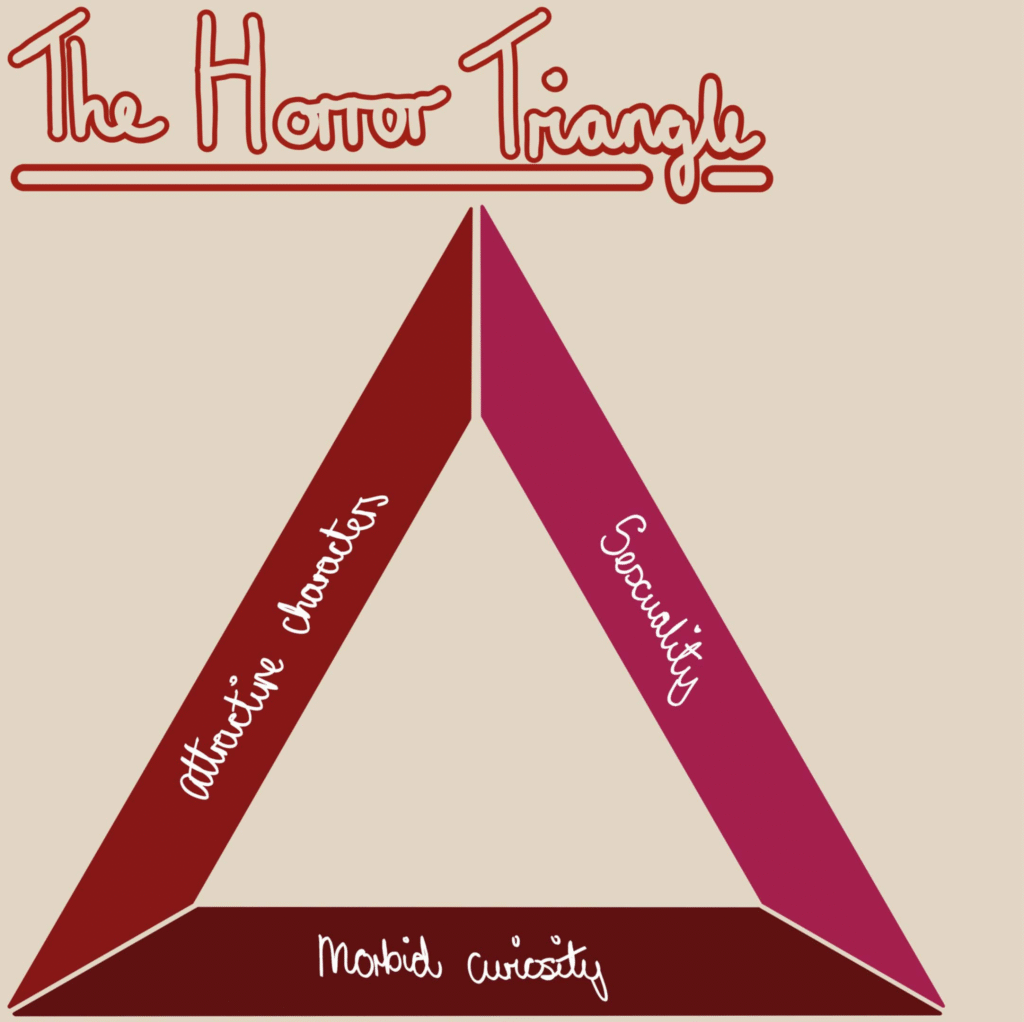
If you take one of these aspects away it likely won’t affect how well your horror piece is received, and you don’t need all three of them to start a horror piece. In fact, all of the things I’ve brought up in this essay probably weren’t intentionally inserted into the cinematography or character and prop design, the horror triangle is just a nice little categorisation method to use in understanding why we as people are so intensely drawn to the twisted and grotesque.
Thanks for reading, stay freaky!
Sources
Vide0 N4sty Queering the Slasher: Scream – https://youtu.be/Kkl6Eno3n8U?si=cMmy-brlWBeqcugD
Vsauce Why are we Morbidly curious – https://youtu.be/ZbdMMI6ty0o?si=rxsGeoXFLcTOaOCH
Matthew Strohl, Horror and Hedonic Ambivalence – https://academic.oup.com/jaac/article-abstract/70/2/203/5980266?redirectedFrom=fulltext&login=true#215494527
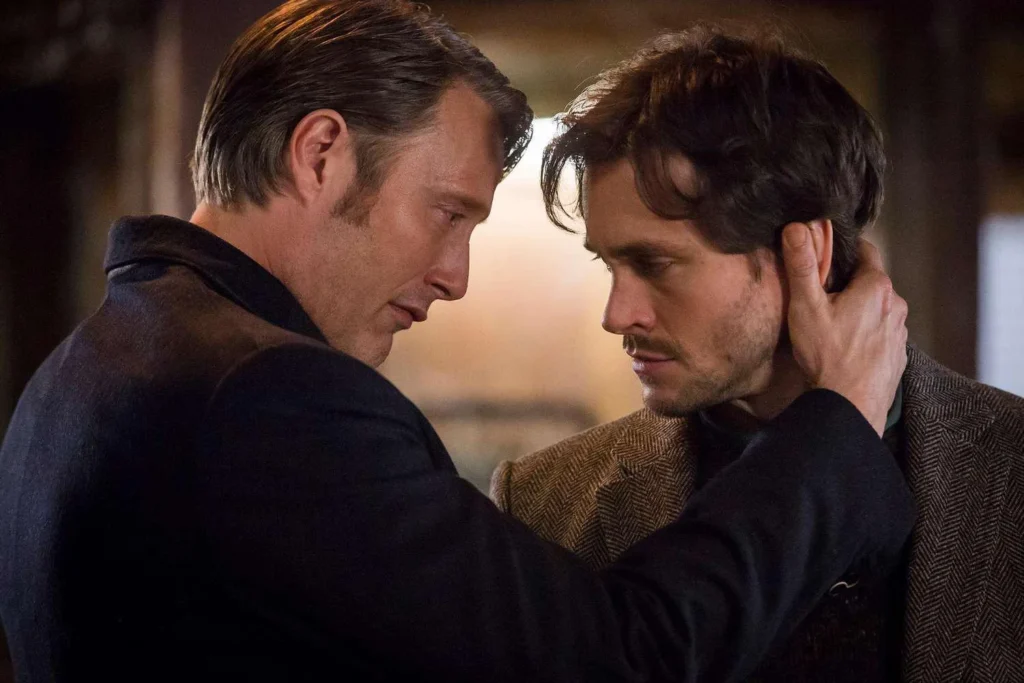
Murder Husbands: a Queer Analysis of NBC Hannibal’s Season 3 Finale ‘Wrath of the Lamb’
SPOILERS FOR NBC’S HANNIBAL AHEAD The NBC television series Hannibal is a horror-thriller show, heavily…
What the Hell Even is Analog Horror Anyways?
Over the past 5 years, if you’ve been on the internet at all, you’ve probably…
The Terrifying Ordeal of Existing in a Body: An Exploration of Akira and Body Horror
In December of 1982, Katsuhiro Ōtomo—under Kodansha—published the first chapter of Akira. The story of…